

Power Transformer
Your Professional Power Transformer Supplier
Hebei Hozee Electric Co., Ltd., a professional Chinese distribution transformer manufacturer registered in Shijiazhuang, Hebei, adheres to "Efficient, Intelligent, Green" and is led by founder/CTO Liu Yanchao (15+ years in transformers) and his team of senior engineers (avg. 8+ years, mastering IEC/GB standards).It provides customized solutions (for voltage, working conditions, load) to serve domestic industrial/new energy/grid upgrade markets and over 50 countries globally. Future-focused on tech innovation, aiming to support the global energy transition.
-
![35kv Transformer]() 35kv TransformerRated power: 1.6MVA 1600kva distribution transformerread more
35kv TransformerRated power: 1.6MVA 1600kva distribution transformerread more
Primary voltage: 35000V
Secondary voltage: 10500V
Impedance: 6.5%
Connect groups:Dyn11 -
![250 Kva Distribution Transformer]() 250 Kva Distribution TransformerRated power: 250 kva distribution transformerread more
250 Kva Distribution TransformerRated power: 250 kva distribution transformerread more
Primary voltage: 11000V
Secondary voltage: 400V
Impedance:4.5%
Connect groups:Dyn11 -
![200 Kva Distribution Transformer]() 200 Kva Distribution TransformerRated power: 200 kva distribution transformerread more
200 Kva Distribution TransformerRated power: 200 kva distribution transformerread more
Primary voltage: 11000V
Secondary voltage: 400V
Impedance:4.5%
Connect groups:Dyn11 -
![500 Kva Distribution Transformer]() 500 Kva Distribution TransformerRated power: 500 kva distribution transformerread more
500 Kva Distribution TransformerRated power: 500 kva distribution transformerread more
Primary voltage: 11000V
Secondary voltage: 400V
Impedance:4.5%
Connect groups:Dyn11 -
![33kv Distribution Transformer]() 33kv Distribution TransformerRated power: 1.6MVA 1600kva distribution transformerread more
33kv Distribution TransformerRated power: 1.6MVA 1600kva distribution transformerread more
Primary voltage: 33000V
Secondary voltage: 400V
Impedance:6.5%
Connect groups:Dyn11 -
![33 0.415 Kv Transformer]() 33 0.415 Kv TransformerRated power: 1MVA 1000kva distribution transformerread more
33 0.415 Kv TransformerRated power: 1MVA 1000kva distribution transformerread more
Primary voltage: 33000V
Secondary voltage: 415V
Impedance:6.5%
Connect groups:Dyn11 -
![Photovoltaic Transformer]() Photovoltaic TransformerRated power: 2500 kva Photovoltaic transformerread more
Photovoltaic TransformerRated power: 2500 kva Photovoltaic transformerread more
Primary voltage: 690V
Secondary voltage: 35000V
Impedance:6-8%
Connect groups:Dyn11
Frequency:50hz -
![33kv Transformer]() 33kv TransformerRated power: 1MVA 1000kva distribution transformerread more
33kv TransformerRated power: 1MVA 1000kva distribution transformerread more
Primary voltage: 33000V
Secondary voltage: 415V
Impedance:6.5%
Connect groups:Dyn11


Why Choose Us
Our Certificate
3 intelligent production lines with an annual production capacity of 500,000 kVA. It has passed ISO 9001 and ISO 14001 certifications, and the products comply with standards such as GB/T and IEC 60076.
Production Equipment
Our core equipment includes: slitting machines, horizontal shearing machines, horizontal shearing winding machines, and annealing furnaces; transformer equipment includes: foil winding machines, winding machines, drying furnaces, casting tanks, and transformer testing equipment.
Production Market
Our products are exported to countries along the "Belt and Road" such AS Southeast Asia, the Middle East, Latin America and Africa. They are adapted to different climatic conditions (such as tropical high humidity, desert high temperature and plateau low pressure) and power grid standards (IEC, ANSI, BS, AS/NZS, etc.), and have passed international certifications such as CE, CB and SASO, achieving "localized technology and global quality".
Technical Team
Our team of senior engineers, with an average of 8+ years of experience, excels in distribution transformer principles, market demands, and international standards (IEC, GB).
Advantages of Power Transformer
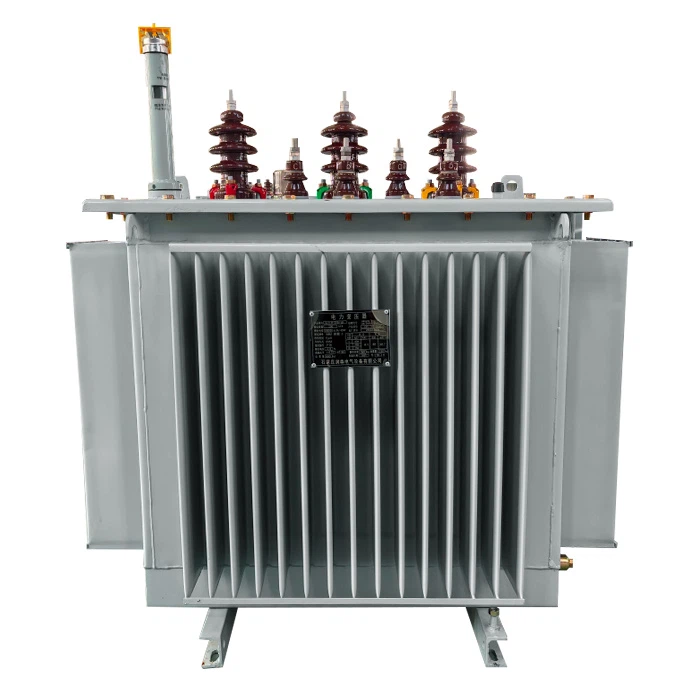


Excellent Voltage Management
Power transformers maintain a consistent voltage level, without fluctuations in demand or supply conditions. So your sensitive electronic equipment allows the smooth operation of industrial processes without power surge or deviated electricity.
Effective Electricity Distribution
The power transformers efficiently transmit electrical power over long distances. They can effectively increase or reduce the current in transmission lines. They help you minimize energy losses during distribution and produce a high percentage of power that reaches you.
Enhanced Safety
Power transformers are designed with safety features that protect your electrical system from faults and overloads. They isolate different sections of the power network and prevent the spread of electrical disturbances. So they minimize the risk of damage and enhance your overall systems’ functionality and reliability.
Multiply Profit
These transformers contribute to significant cost savings in your operations. They minimize energy losses and utilize the unused power. It means you are liable to pay lower generation costs and minimize the need for additional infrastructure. This quality provides economic benefits for both utilities and you as consumers.
Freedom Of Utility
Power transformers are available in various sizes and configurations. So you can use them for your wide range of applications such as running industrial plants, substations, and manufacturing equipment as well as residential services. Their customization enables them to meet diverse energy demands.
Ecological Benefits
These transformers are designed with modern technology. Their advanced materials and innovative designs reduce energy losses and utilize renewable energy as well. These features help you minimize the environmental impact of power transmission and enable you to develop an independent and sustainable energy infrastructure.
Technical Specification
|
Model |
S-M-1600kVA-33/0.4 |
|
Type |
Oil Immersed Power Transformer |
|
Standard |
IEC60076 |
|
Rated Power |
1600kVA |
|
Frequency |
50HZ |
|
Phase |
Three |
|
Cooling Type |
ONAN |
|
Primary Voltage |
33KV |
|
Secondary Voltage |
0.4KV |
|
Winding Material |
Copper |
|
Vector Group |
Dyn11 |
|
Impedance |
6.5% |
|
Tap Changer |
NLTC |
|
Tapping Range |
±2*2.5% @ Primary Side |
|
No Load Loss |
2.12 KW |
|
On Load Loss |
17.55KW |
|
Accessories |
Standard Configuration |
Types of Power Transformers
Step-Up Transformers
Step-up transformers are used to increase the voltage level of an electrical supply. They are typically used in power transmission systems to transfer electrical energy over long distances. They convert voltage from low levels to higher voltage levels, and the amount of electrical energy that can be transmitted is increased, reducing the amount of energy lost as heat during transmission.
Step-Down Transformers
Step-down transformers are used to decrease the output voltage level of an electrical supply. They are typically used in homes and businesses to reduce the high-voltage electrical energy received from the electrical grid to a safe and usable low-voltage level. This allows electrical devices to operate safely and efficiently.
Isolation Transformers
Isolation transformers are used to isolate electrical devices from the electrical grid. They are typically used in medical equipment, laboratory equipment, and other sensitive electrical devices to protect them from electrical noise and interference. Isolation transformers are designed to have a high degree of electrical isolation between the primary and secondary windings, providing a safe and reliable electrical supply.
Auto Transformers
Auto-transformers are a type of power transformer that uses only one winding for the primary and secondary circuits. They have the advantage of being more efficient and less expensive than other types of power transformers, but they typically have lower power output capabilities. Auto-transformers are typically used in applications where power levels are relatively low, and efficiency is important.
Components of Power Transformer
Primary Winding
The primary winding is the first coil of wire in a power transformer. Primary transformer windings are often connected to the high-voltage electrical supply and are responsible for receiving the electrical energy.
Secondary Winding
The secondary winding is the second coil of wire in a power transformer. It is connected to the electrical device that requires energy and is responsible for delivering the transformed electrical energy.
Core
The core is the metallic material that is used to connect the primary and secondary windings. It is typically made of laminated iron or steel and is designed to provide a path for the magnetic field to flow through.

- An alternating current is passed through the primary winding. It establishes a changing magnetic field around the transformer’s iron core. This occurs due to the magnetic effect of current flow.
- As the alternating voltage cycles, the magnetic field strength inside the core correspondingly expands during one half of the cycle and collapses back during the other half.
- This continuously varying magnetic flux permeates from the inner core and cuts through the secondary winding wrapped around the same iron core structure.
- According to Faraday’s law of electromagnetic induction, the changing magnetic field produces an electromotive force (EMF) in the secondary winding coils as the flux cuts through it.
- The magnitude of induced EMF in the secondary depends upon factors like the rate of change of flux, number of turns in the winding, and other transformer specifications.
- By adjusting the number of turns in the two windings, the induced voltage in the secondary can be stepped up or down relative to the primary voltage using the transformer’s turn ratio.
- This transformed voltage is then available for onward power transmission or distribution applications after passing through the isolated secondary winding.
Application of Power Transformer
Substations
Transformers in substations play a key role in high-voltage transmission. Here, step-up transformers elevate distribution voltages for efficient long-distance power transmission through transmission lines. On the other hand, step-down transformers lower transmission voltages for distribution to towns and cities through distribution lines.
Copper Mines
Because of the fire and explosion risks underground, copper mines require specially designed isolated transformers. These transformers have enclosures surrounding the coil assemblies to prevent arcing from causing ignitions in hazardous mine atmospheres.
Power Plants
Within thermal and hydroelectric power plants, generators produce electricity at a voltage suitable for efficient generation, which may differ from transmission standards. Hence, station service transformers adjust the voltages to the required transmission levels before sending them out through transmission lines.
Residential Distribution
Pole-mount transformers located on utility poles along streets help reduce distribution voltages even further for safe usage levels in homes. Pad-mount transformers installed above ground at housing complexes perform a similar voltage conversion function for supplying various residential loads.
FAQ
We're professional power transformer manufacturers and suppliers in China, specialized in providing high quality products with advanced design. We warmly welcome you to buy power transformer at competitive price from our factory. For specifications and drawings, contact us now.