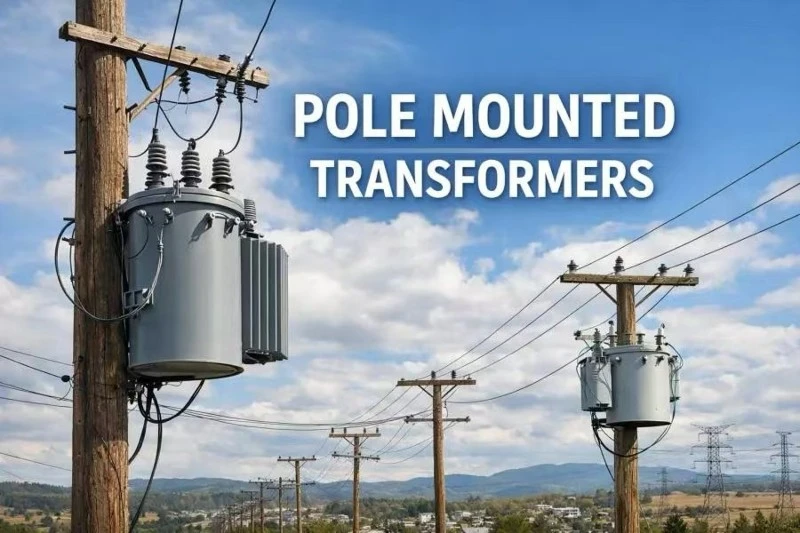
A Pole Mounted Transformer is specified differently from a pad-mounted or indoor unit. The pole itself sets limits on weight and dimensions, the overhead line sets the voltage and connection, and the utility's own standards decide what is acceptable. Utilities and EPC contractors who prepare the quotation parameters carefully usually get fewer revision cycles and fewer installation problems on site.
Mounting Conditions & Weight
Everything starts with the pole. Confirm the pole class, the available mounting height, and whether the pole is shared with telecom or street lighting equipment. Weight matters more than most buyers expect - a 100 kVA oil-immersed unit is manageable for two linemen with a hoist, but larger units need a crane and a stronger pole structure. Hanger bracket spacing and tank dimensions must match the pole hardware already in stock, otherwise the utility ends up fabricating adapters on site. Also check clearance to the ground and to any road, since these are usually fixed by local code rather than by the transformer supplier.
Capacity, Voltage & Phase Configuration
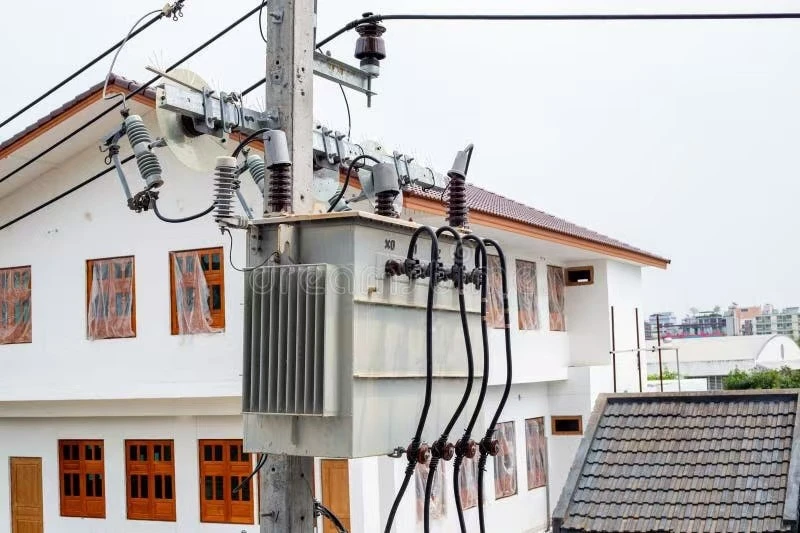
Capacity selection follows the load, but on a distribution line the practical constraint is often how many customers one pole position can reasonably serve. A Single Phase Pole Mounted Transformer is the standard choice for residential spurs and rural lines, typically in the 10–167 kVA range, feeding a small cluster of homes from a 120/240V or 230V secondary. Three-phase pole-mounted units are used where small commercial or light industrial loads appear along the same line. Primary voltage must match the line voltage exactly - 11 kV, 13.8 kV, 19.9 kV, and 33 kV are all common, and a mismatch is not correctable by tapping. Tapping range covers normal line voltage variation only, typically ±2×2.5%.

Protection, Enclosure & Utility Standards
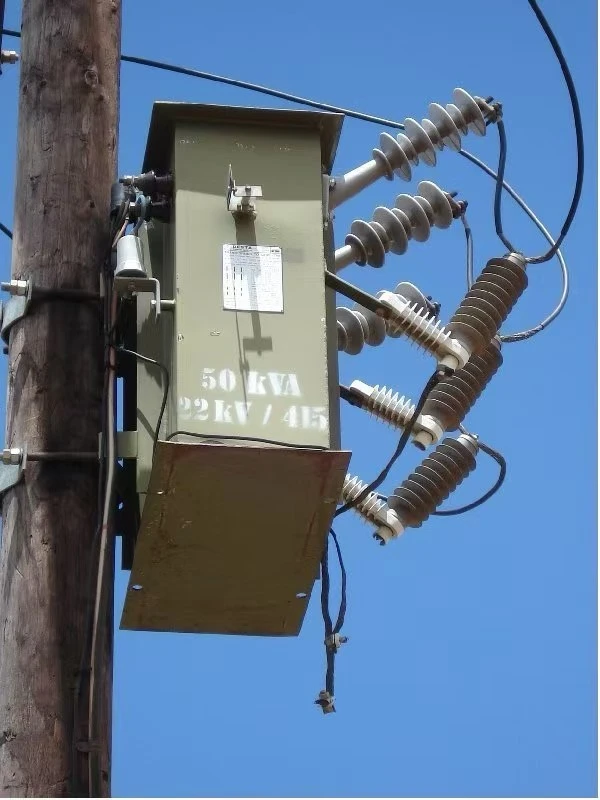
Overhead units face rain, dust, salt spray, and occasional lightning. Confirm the enclosure protection level, the bushing type and creepage distance for the local pollution level, and whether surge arresters are supplied by the transformer manufacturer or by the utility. In coastal or heavily polluted areas, creepage distance is often the detail that decides whether the unit survives the first wet season. Most importantly, ask for the utility's own specification before quoting: IEC 60076 is the baseline, but many utilities add their own requirements on losses, impedance, noise, and testing that a standard catalogue unit will not meet. Loss limits in particular are increasingly regulated, and a unit that fails the local efficiency threshold cannot be energized.
About Hebei Hozee Electric Co., Ltd.
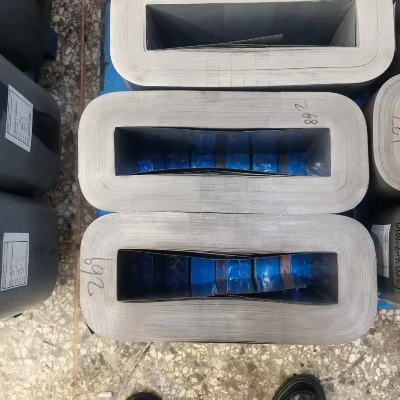
Hebei Hozee Electric Co., Ltd. manufactures oil-immersed transformers, dry-type transformers, single-phase transformers, and transformer cores including laminated cores and single-phase wound cores. Our single-phase wound cores are produced in-house, which lets us control no-load loss and weight - two parameters that matter directly on a pole. If you are preparing a Pole Mounted Transformer enquiry, send us the line voltage, required capacity, pole hardware details, and the utility's specification, and our engineering team will confirm the configuration before quotation.