

Bushing failures rarely announce themselves. A unit that has performed for years in dry conditions can flash over within months once installed near a coastline or downwind of a cement plant. The reason is not a manufacturing defect-it is the interaction between surface contamination and moisture, and the design margin that was supposed to account for it.
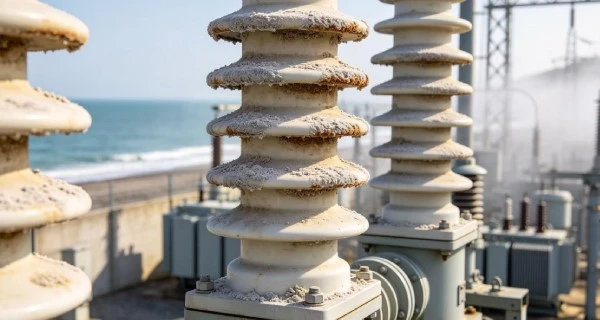
Dry pollution is mostly harmless. Salt, industrial dust, and agricultural deposits sit on the shed surface without conducting much current. The problem starts when fog, dew, or light rain wets that layer. A conductive film forms, leakage current flows, and localized dry bands appear as the current heats and dries sections of the surface. Voltage concentrates across those dry bands, and if the stress exceeds the air breakdown threshold, a flashover follows. Coastal sites and heavy industrial zones are the classic cases, but the mechanism applies anywhere contamination accumulates faster than rain washes it away.-2-7
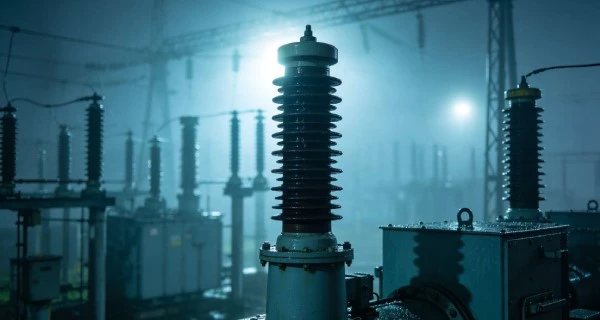
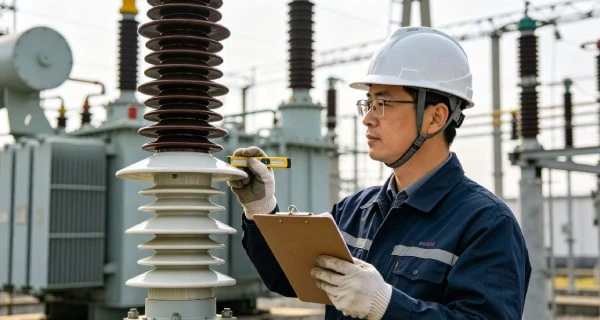
Creepage distance is the first design lever, and IEC TS 60815 provides the framework. The standard starts with site pollution severity (SPS), which is determined from contaminant type, deposition rate, and wetting frequency. From SPS, the reference unified specific creepage distance (RUSCD) is derived, and correction factors for altitude, insulator diameter, shed profile, and parallel insulator count are applied to reach the actual required distance. The correction step matters because two sites with the same SPS class can demand different distances once altitude or shed geometry is factored in.-5
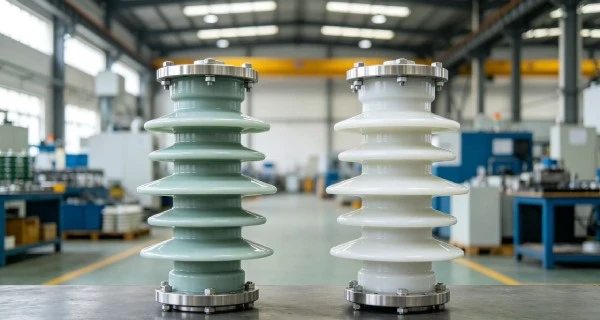
But creepage alone does not solve pollution flashover. Shed profile governs how well the surface self-cleans and how moisture drains. Too few sheds or a profile that traps water between ribs can negate the benefit of added distance. Material choice adds another variable: silicone and composite housings offer hydrophobicity that limits leakage current, but that property degrades over time as contamination covers the surface. RTV coatings provide a similar benefit with the same caveat-they are a mitigation measure, not a substitute for adequate creepage.-7
For a high-voltage transformer bushing creepage distance specification in a polluted environment, the practical approach is to work from site data rather than a generic "heavy pollution" label. Contaminant type and wetting pattern determine the SPS class, and the SPS class determines the starting creepage figure. Hebei Hozee Electric Co., Ltd. manufactures oil-immersed transformers, dry-type transformers, and single-phase transformers, with laminated cores and single-phase wound cores produced in-house. When a project specifies high-voltage transformer bushing creepage distance for coastal or industrial service, the design conversation starts with the pollution severity assessment, not a catalog number.